
What Hyperbaric Chamber Specs Matter for Home Use?
Choosing a home hyperbaric chamber gets easier when specifications become everyday questions: Will it fit? How does oxygen reach the user? How loud is the complete system? What maintenance will it need?
1. Start With Your Room and Routine
Before comparing product sheets, decide where the system will go. Measure the room, doorway, hallway, and elevator if applicable. Consider whether you prefer to lie down or sit, need help with entry, or plan to move the equipment.
A flexible chamber may be easier to relocate. A rigid chamber is generally installed more permanently and may offer different pressure, entry, comfort, or control options.
2. ATA in Everyday Language
ATA stands for atmospheres absolute. The air around us at sea level is approximately 1.0 ATA. At 1.3 ATA, total chamber pressure is about 30% higher than normal atmospheric pressure; at 2.0 ATA, it is about twice normal pressure.
Check the maximum pressure, adjustable range, pressure-change time, and whether controls are available inside, outside, or both. A larger ATA number does not by itself prove greater suitability or effectiveness.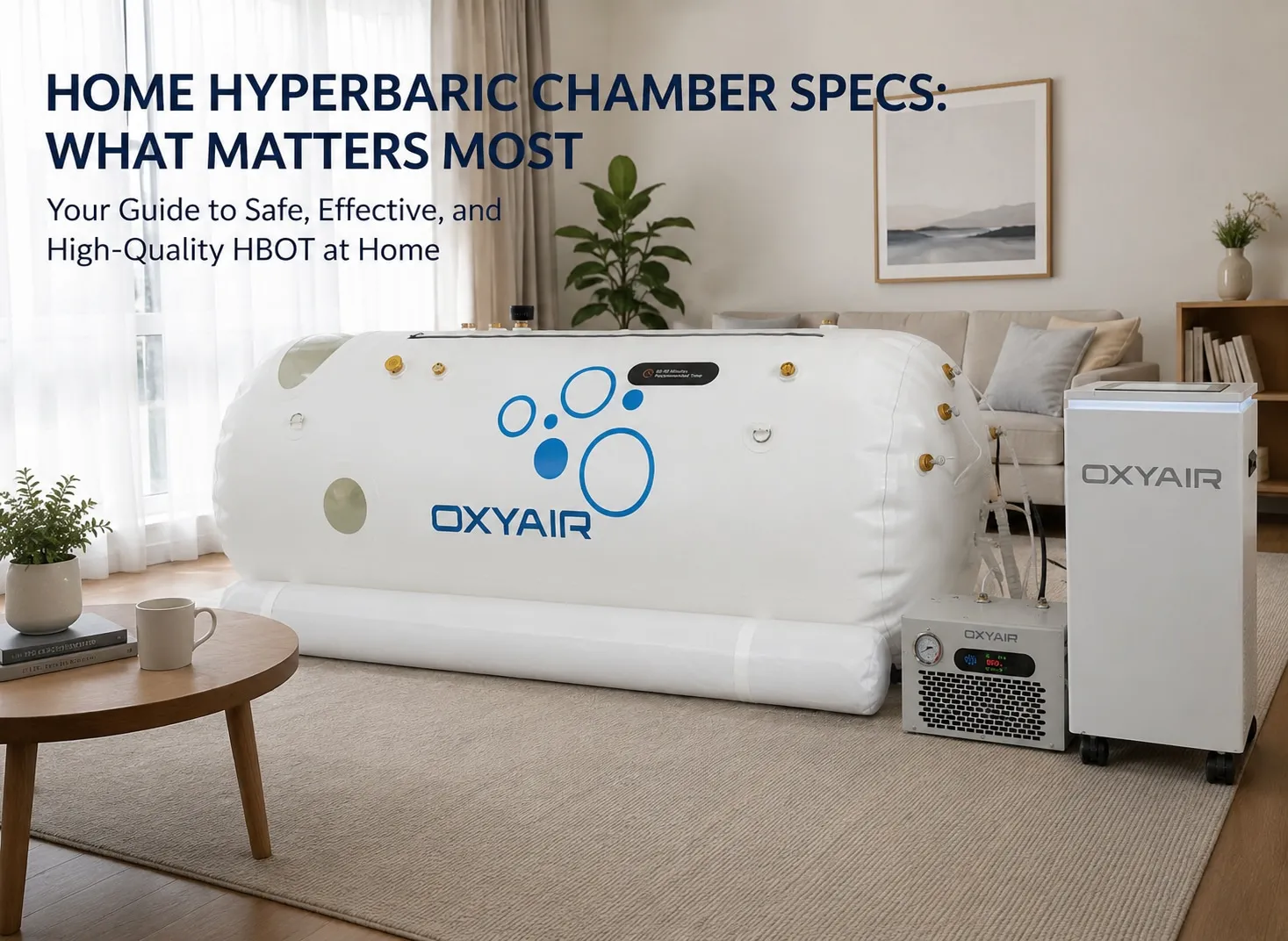
3. How Does Oxygen Reach the User?
Many home systems use compressed room air to pressurize the chamber and deliver oxygen separately through a mask or breathing interface. In this design, the chamber atmosphere remains closer to normal air instead of the entire chamber being filled with high-concentration oxygen.
Ask whether a concentrator is included, its purity and flow, and whether it operates against chamber pressure. Mask fit, hose routing, and exhaled-gas management also matter. With BIBS, ask where exhaled gas is discharged.
4. Will It Fit You and Your Home?
Internal diameter and usable length say more about comfort than “single-person chamber.” Consider shoulder room, legroom, the mattress or seat, windows, lighting, temperature control, and the opening.
Leave room for the compressor, concentrator, cooling equipment, hoses, door movement, and service. Confirm system weight, electrical supply, ventilation, and the delivery path.
| Measurement | Why It Matters |
|---|---|
| Internal diameter and length | Personal space and preferred position |
| Door or zipper opening | Ease of entry and exit |
| External dimensions | Basic room fit |
| Complete footprint | Space for all supporting equipment |
| Weight and capacity | Floor planning and user suitability |
5. How Loud Is the Complete System?
Sound may come from the compressor, concentrator, fans, valves, airflow, and pressure release. Pressurization may sound different from steady operation.
Ask for a dB(A) value, distance, location, operating phase, and equipment included. A compressor-only number cannot describe the complete system. Hard floors and bare walls may also amplify sound.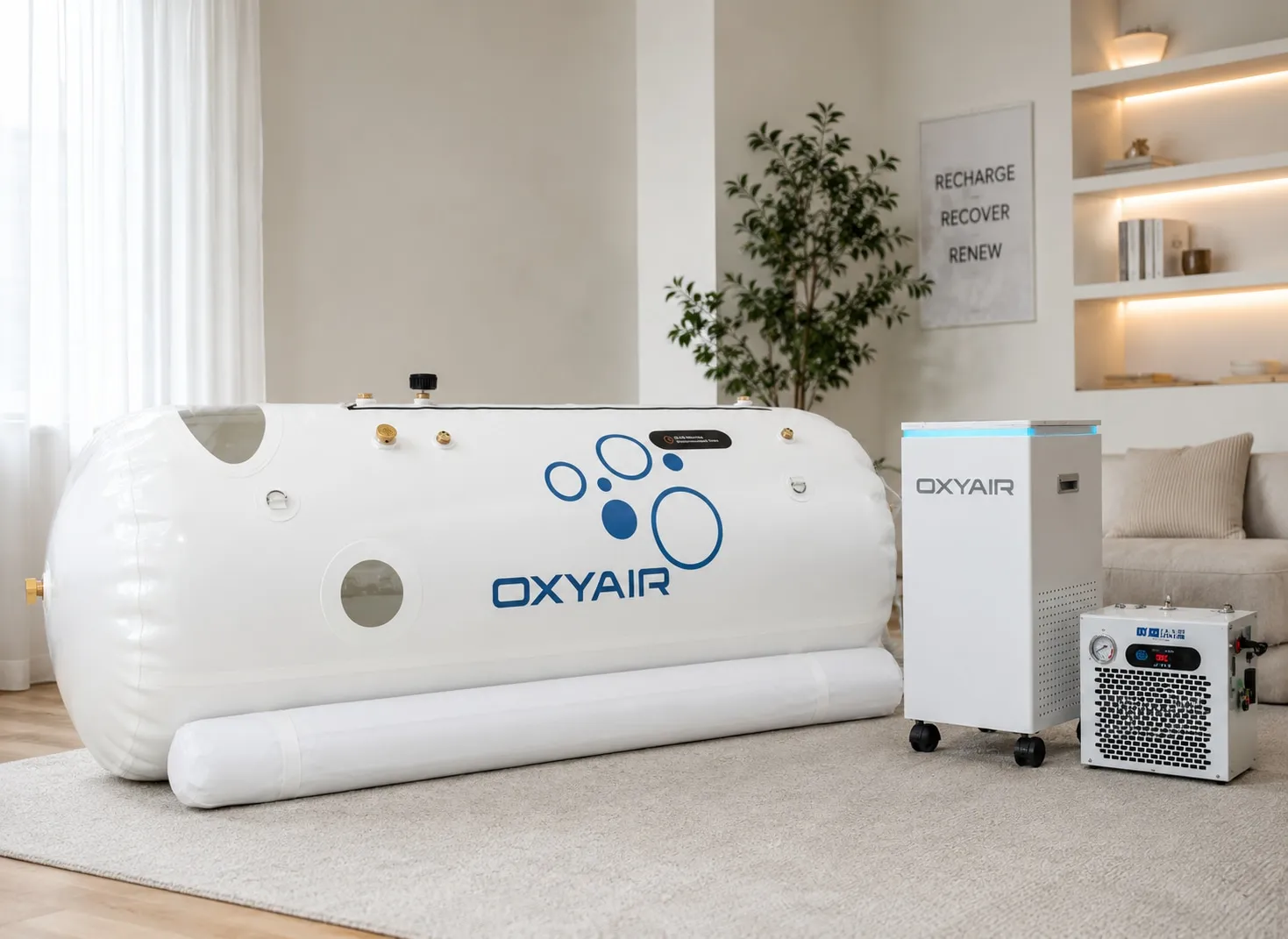
6. Soft-Shell or Hard-Shell Materials?
| Feature | Soft-Shell | Hard-Shell |
|---|---|---|
| Structure | Reinforced coated fabric | Rigid engineered structure |
| Placement | Often easier to relocate | Usually a fixed installation |
| Opening | Commonly uses a zipper system | Uses a rigid door or hatch |
| Maintenance focus | Fabric, seams, windows and zippers | Seals, windows, doors and structural parts |
| Pressure | Depends on the exact model | Depends on the exact model |
Flexible chambers may use coated polyester or nylon. Hard-shell systems may use acrylic, steel, aluminum, or combined materials. Ask about approved cleaners, inspection, and replaceable wear parts.
7. Five Questions to Answer Before Buying
Confirm the adjustable range, not just maximum ATA.
Review the source, flow, mask or BIBS, and performance under pressure.
Compare internal comfort with the complete installed footprint.
Request complete-system noise data under clearly stated conditions.
Check approved cleaners, maintenance, warranty, training, and spare parts.
8. Frequently Asked Questions
Does a home hyperbaric chamber contain pure oxygen?
Not necessarily. Many systems are pressurized with air while oxygen is delivered through a mask or breathing interface. Confirm the design of the specific model.
Do I need an oxygen concentrator?
It depends on the chamber design and intended setup. If one is used, it must provide appropriate flow and pressure for the system.
Is a soft chamber easier to move?
Often, yes, because flexible systems are generally lighter. Actual portability depends on the frame, compressor, concentrator, and assembly requirements.
Can the compressor be placed farther away?
Possibly, but hose length and airflow requirements may limit placement. Follow the manufacturer’s approved configuration.
Find a Chamber That Fits Your Home
Share your room size, preferred position, target pressure, and comfort priorities with Haohealthy.
Ask for a RecommendationReferences
U.S. FDA: Safe Use of HBOT Devices · 21 CFR 868.5470 · NOAA: Understanding Pressure